Material and inner attention – Ágnes Soltész at the “COLOR–SPACE” exhibition and guided tours at Villa11
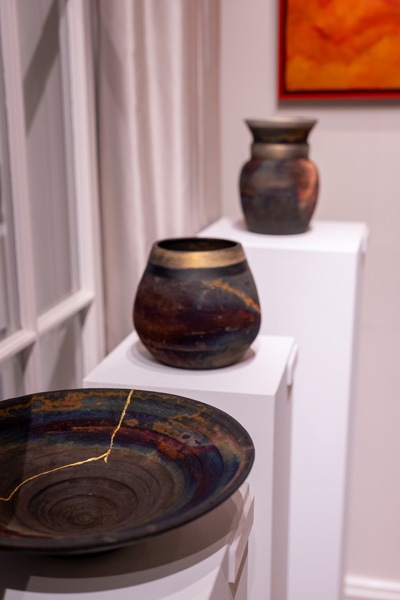
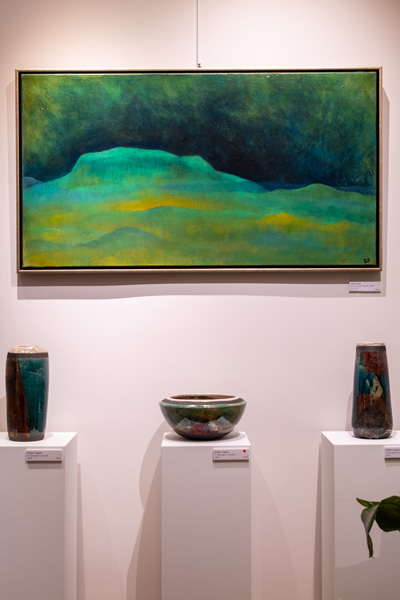
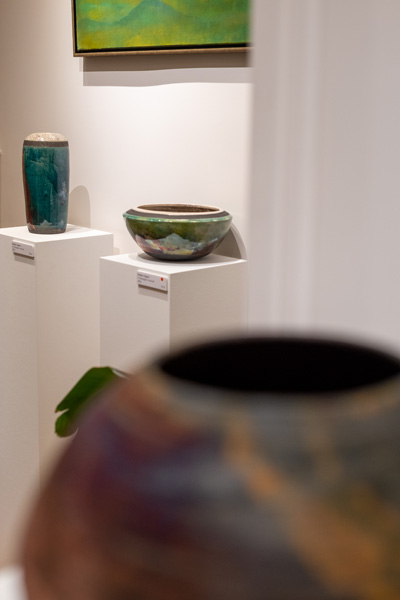
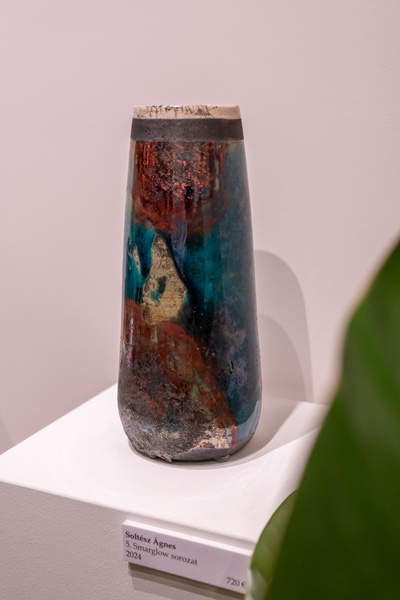
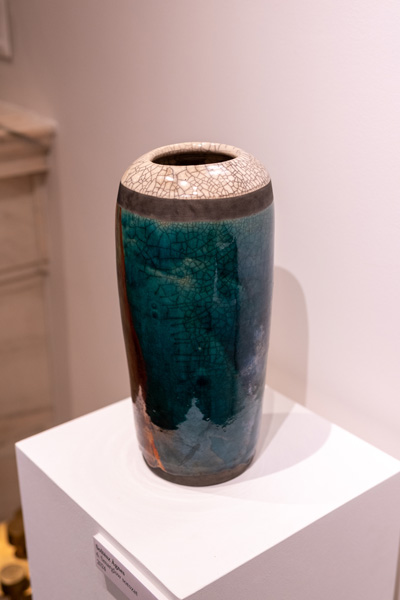
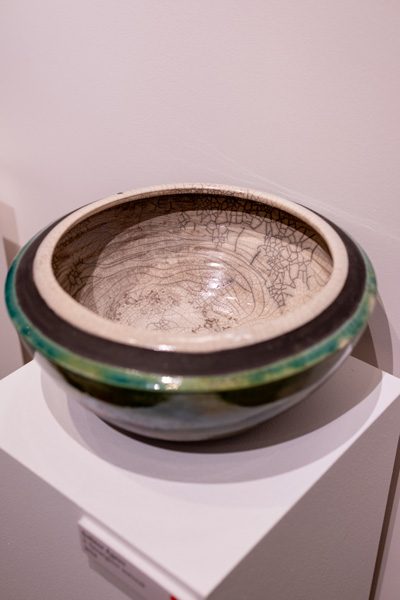
The “SZÍN–TÉR” exhibition, held in the spaces of Villa11, was realized in an environment that consciously allowed room for deep engagement and personal presence. As one of the exhibition’s defining artists, Ágnes Soltész presented works created using the raku technique, which were not merely displayed but became genuine experiences for visitors. The more intimate scale of Villa11’s spaces made it possible for the ceramics to function not as background elements, but as independent presences, creating a direct relationship between the artwork and the viewer.
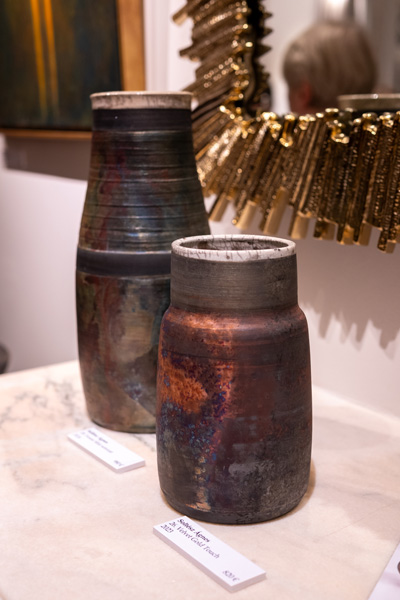
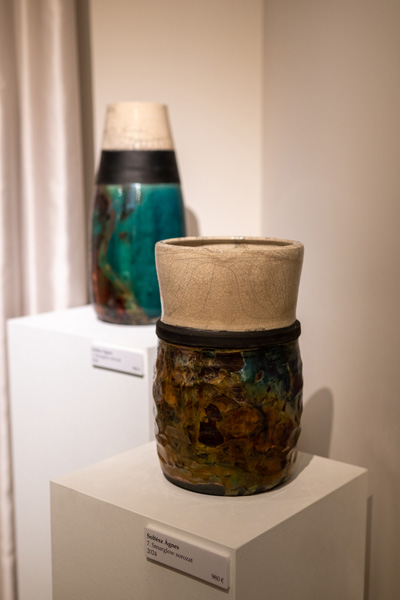
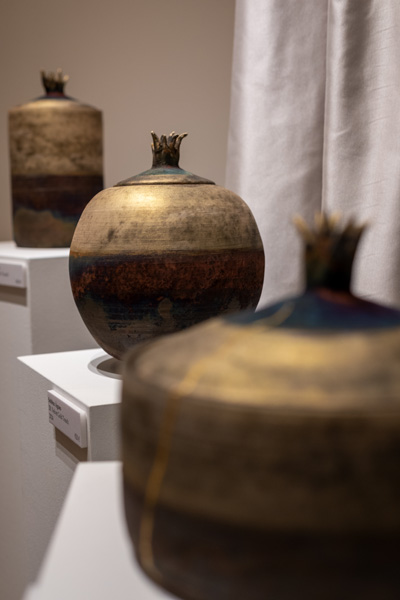
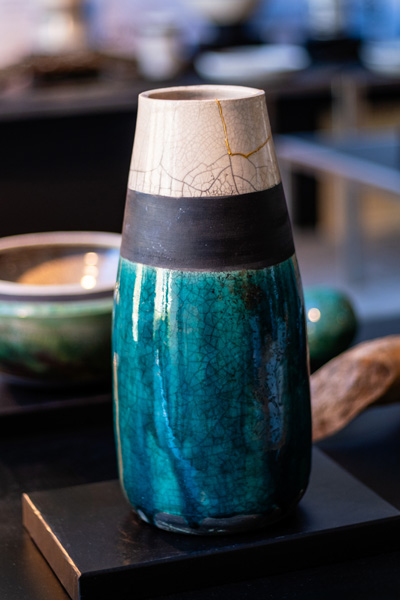
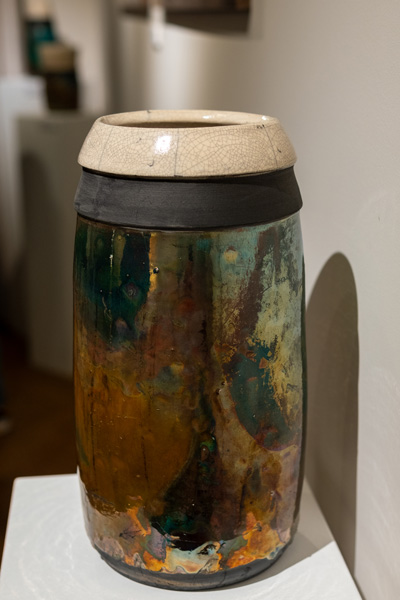
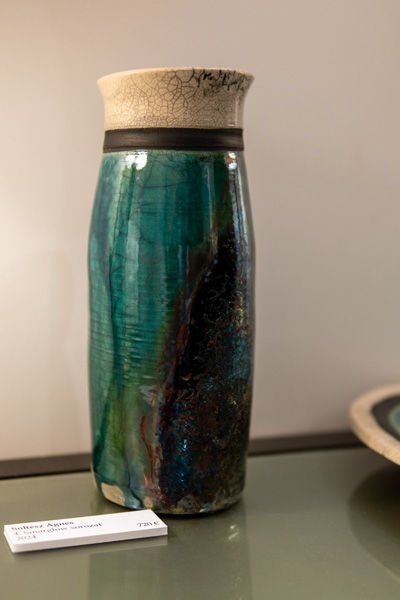
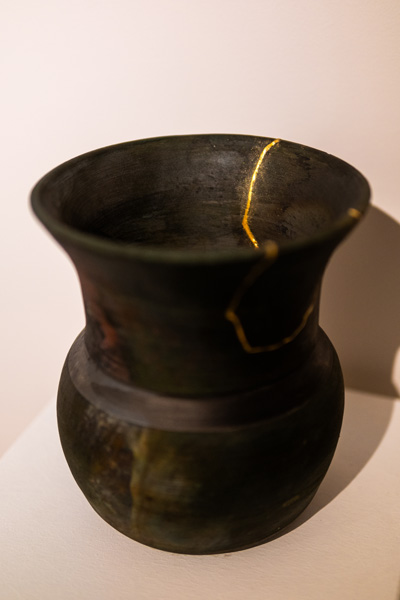
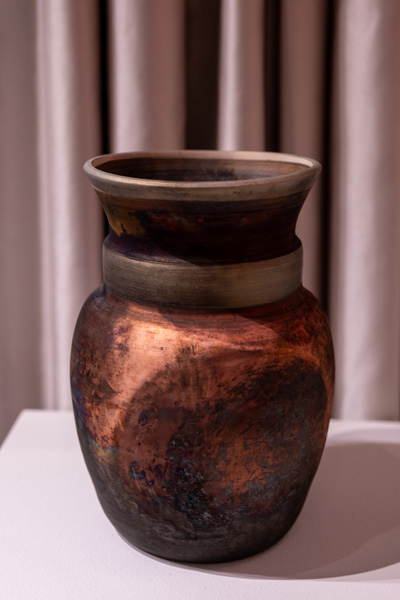
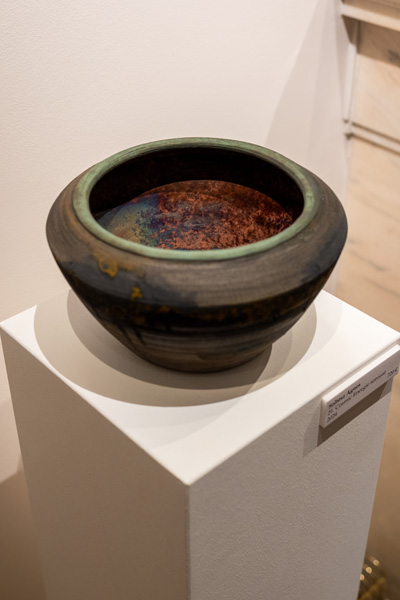
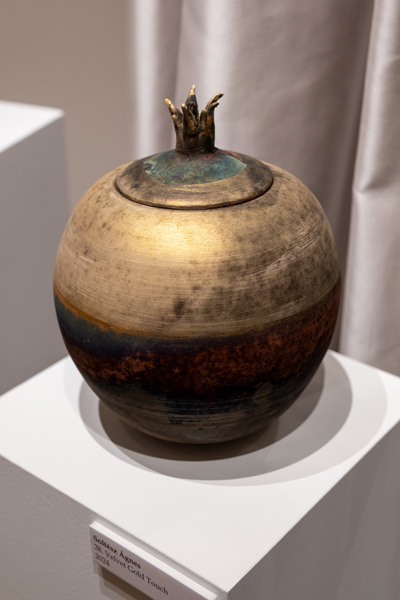
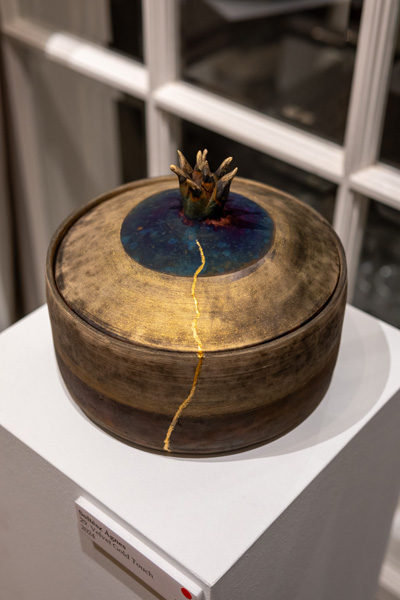
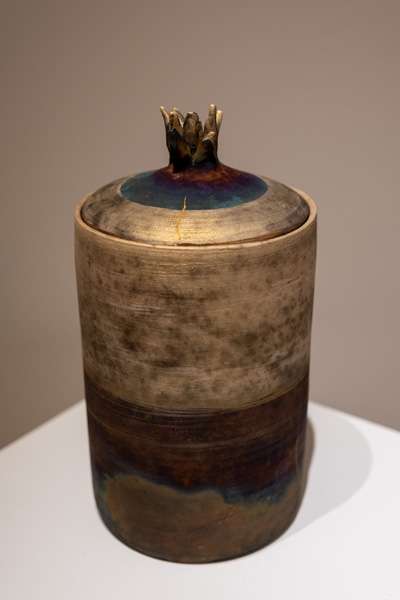
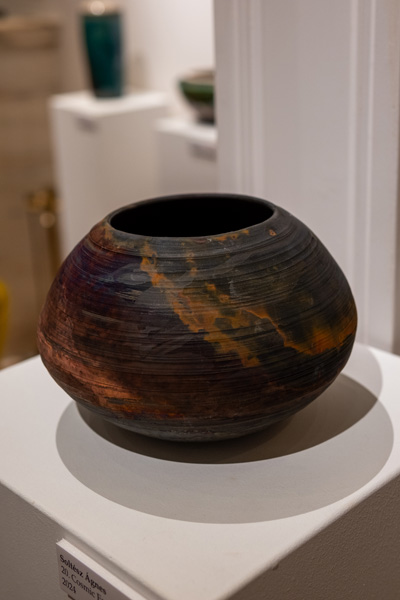
Ágnes Soltész’s works carry the spirit of the traditional Japanese raku technique, in which creation is not merely a technical process, but a collaboration with the material and the natural elements. The unpredictability of the surfaces formed through the interaction of fire, earth, and air makes each piece unrepeatable. Cracks, discolorations, and subtle surface variations appear not as flaws, but as meaningful traces reflecting the fragility and transience of life. These traces are not closed forms, but imprints of a process: visible memories of the shared work of time and matter.
Underlying the works is the philosophy of wabi-sabi, which places the beauty of imperfection, simplicity, and impermanence at its center. Ágnes Soltész’s ceramics do not rely on dramatic gestures, but on quiet presence: on the kind of attention in which the material’s own story can unfold. The act of reception thus becomes not immediate, but gradual, requiring time and openness from the viewer. The atmosphere of Villa11 naturally supported this slowing down and deepening of perception.
One of the most vital layers of the exhibition was provided by the several guided tours personally led by Ágnes Soltész. These evenings did not merely convey information, but created a genuine sense of closeness between the artist and the visitors. Participants could ask questions, engage in conversation, and gain an intimate understanding of a way of thinking in which material, form, and the “chance” that emerges during firing become equal creative partners. Through this direct presence, the decisions, acts of letting go, and responses behind the artworks also became visible.
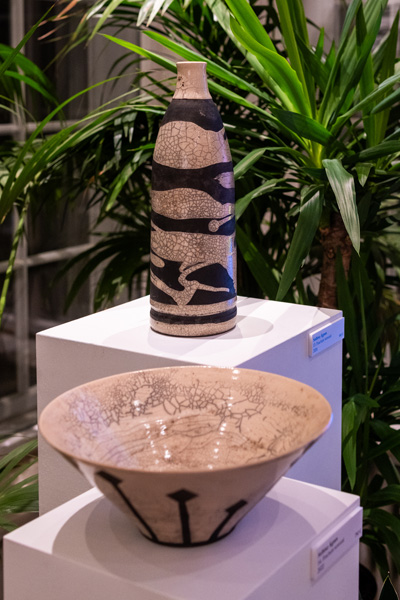
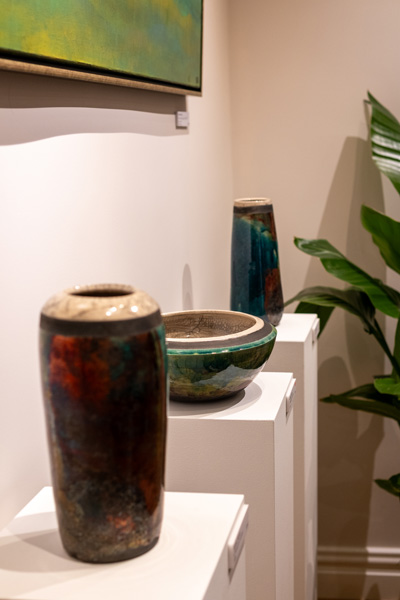
During the guided tours, the process of creation also appeared as an inner journey. In Ágnes Soltész’s understanding, the rotation of the wheel becomes a kind of connection to a universal energy, where creation is not about control, but about surrender and the search for inner harmony. This perspective became an experience in itself during the guided occasions, adding a new interpretive layer to the exhibited works. Visitors thus encountered not only objects, but also a way of thinking.
The “SZÍN–TÉR” exhibition was open to visitors at Villa11 until 28 February 2025. The ceramics on display could also be previewed and purchased in advance through Villa11’s platform, while the guided tours were free of charge but required prior registration. In this way, the exhibition and its accompanying events created not merely an opportunity for presentation, but a true meeting point between artist, artwork, and audience.
Ágnes Soltész’s presence at Villa11 and her personal guided tours are a strong example of how an exhibition can become more than a simple presentation: it can become an experience in which material, time, and human attention come into quiet harmony, and where art does not create distance, but connection.